
Brown Butter Sage Tortellini is a cozy, restaurant-style pasta that comes together in just 25 minutes. Cheese tortellini gets tossed in nutty brown butter with crispy sage, garlic, and Parmesan, then topped with toasted hazelnuts for crunch.
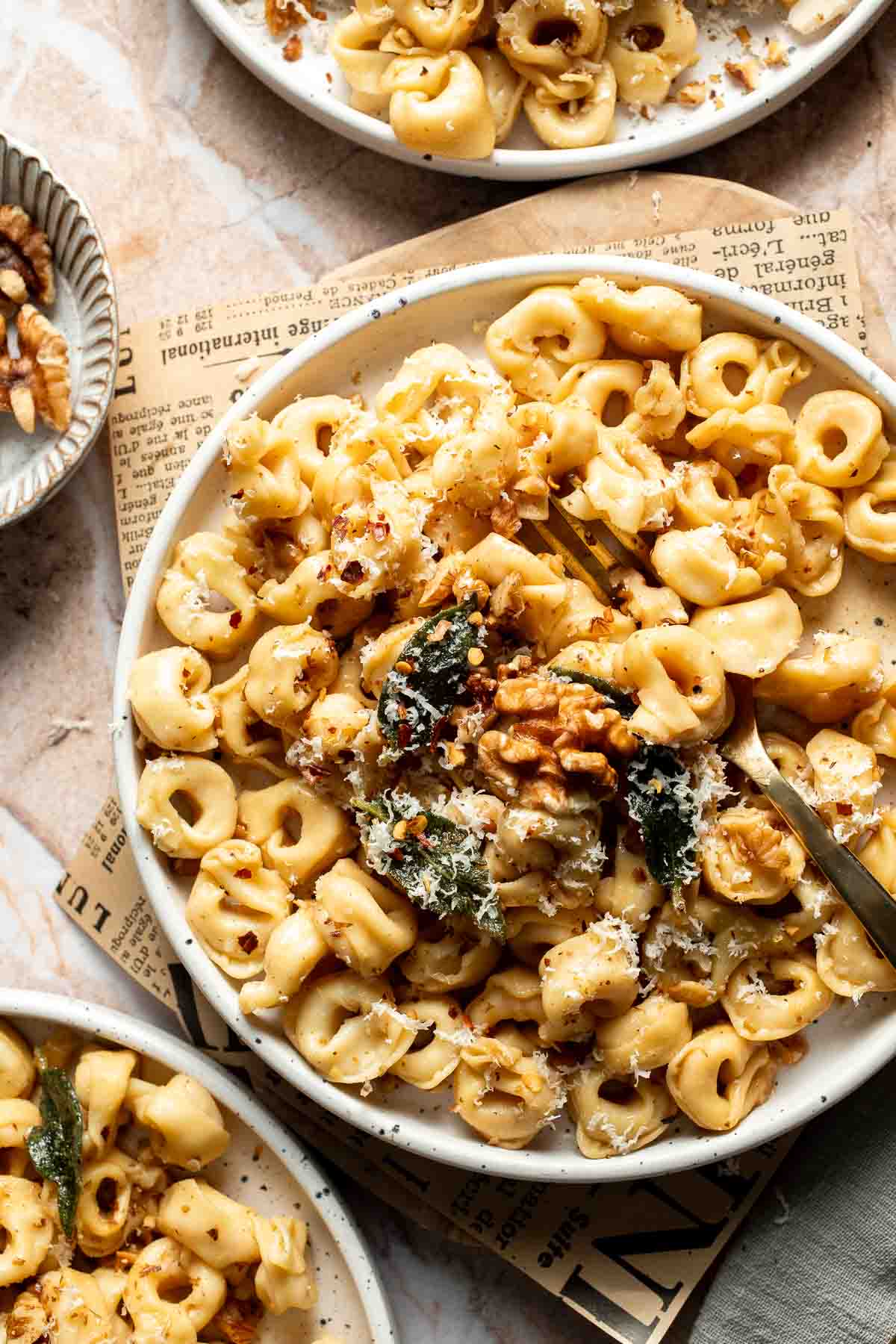
Browning butter takes only a few minutes and turns it into a golden, nutty sauce that clings to every tortellini. A splash of starchy pasta water makes it glossy, and a little lemon and red pepper flakes are optional extras. It's simple enough for a weeknight and special enough for guests. I tested the timing a few times so the sage, butter, and tortellini are all ready at the same moment.
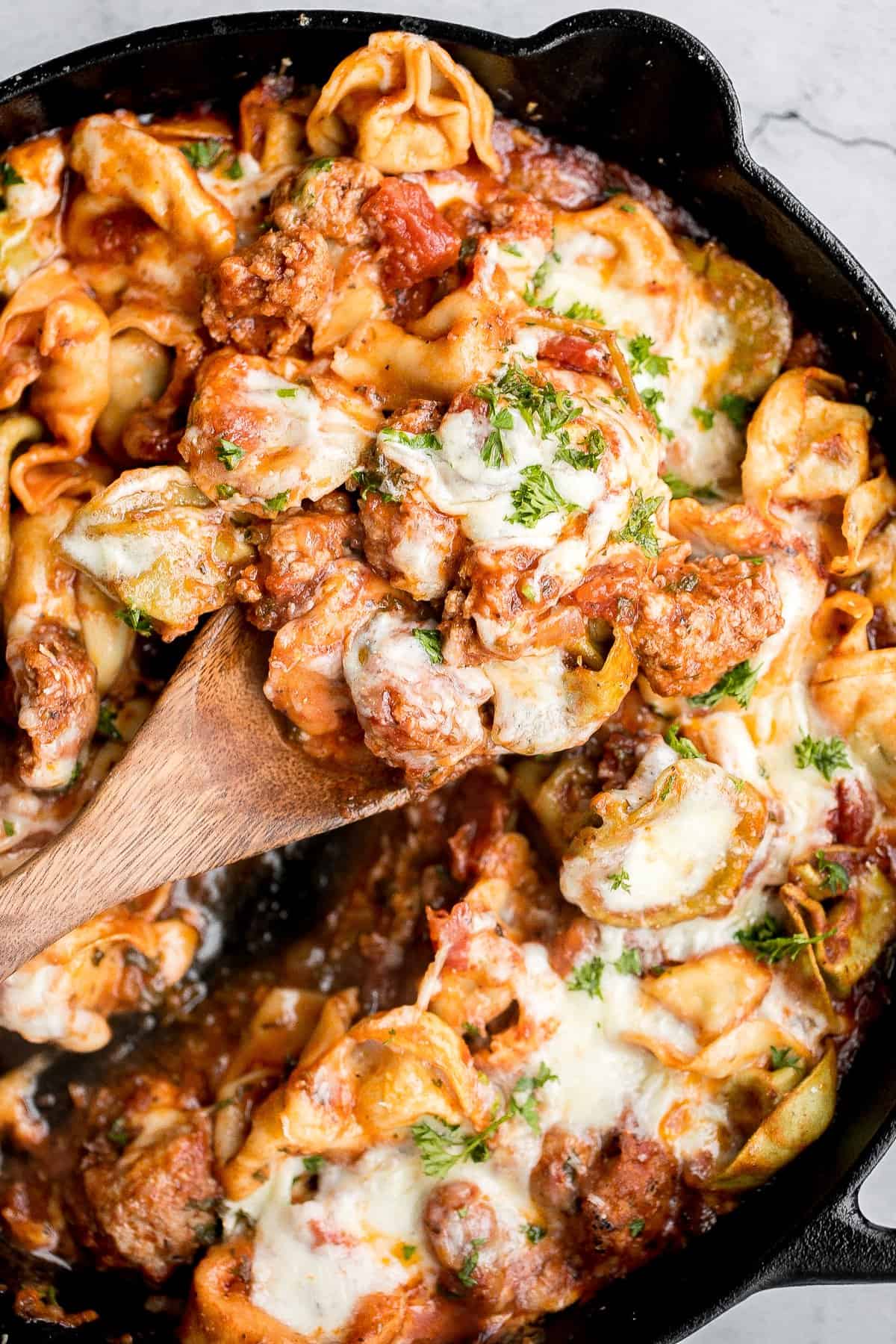
If you loved this recipe, try our Cheesy Tortellini and Sausage Bake, Creamy Tortellini Minestrone Soup or Butternut Squash Ravioli next.
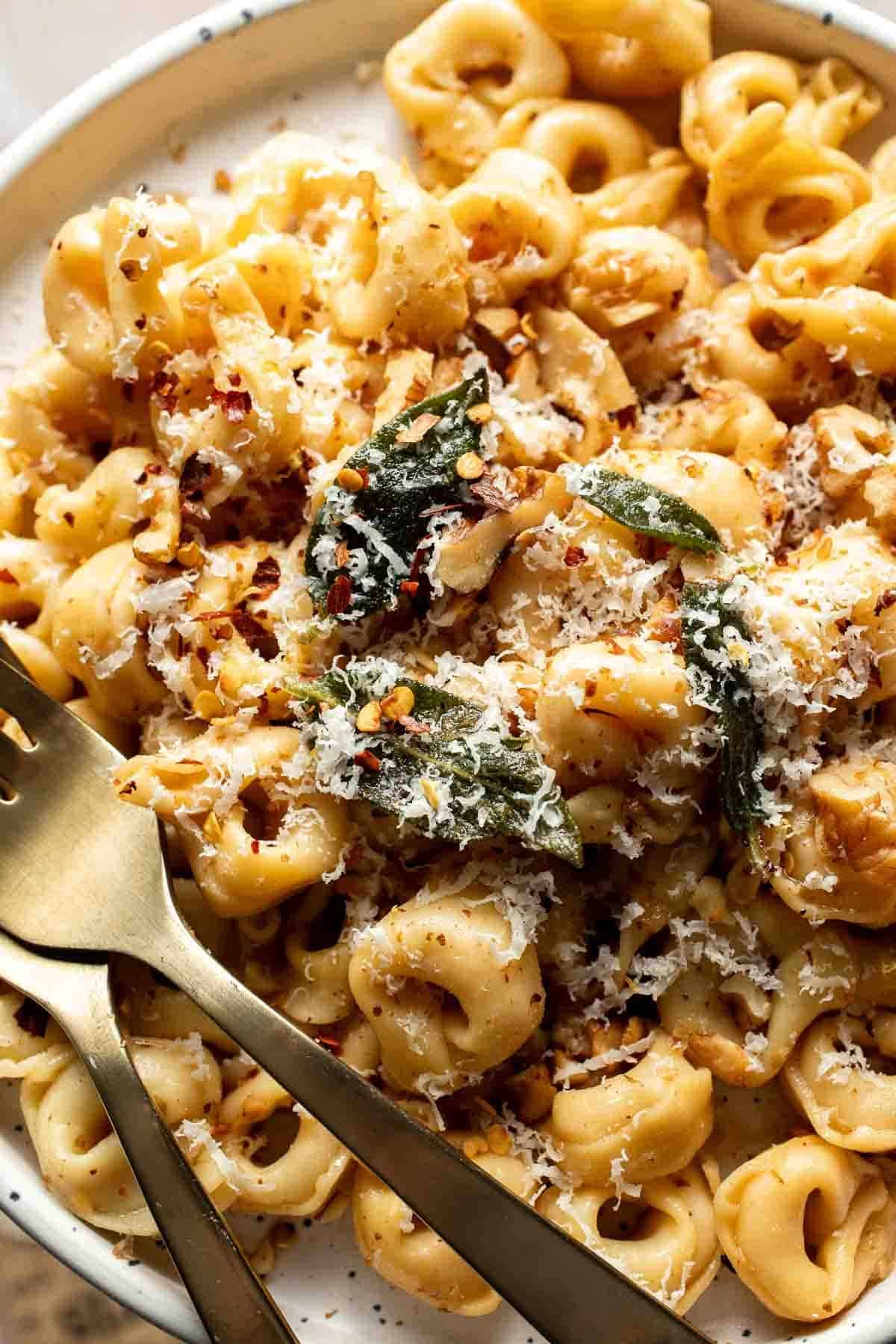
Why You'll Love This Recipe
- Ready in 25 minutes. Dinner is on the table faster than takeout.
- Just a handful of ingredients. Tortellini, butter, sage, nuts, garlic, and Parmesan do all the work.
- Crispy sage and toasted nuts. They add crunch and a deep, nutty flavor to every bite.
- Restaurant-style, but easy. Browning butter feels fancy, yet it takes just a few minutes.
- Easy to customize. Swap the nuts, add vegetables, or finish with lemon and red pepper flakes.
Jump to:
Ingredients and Substitutions
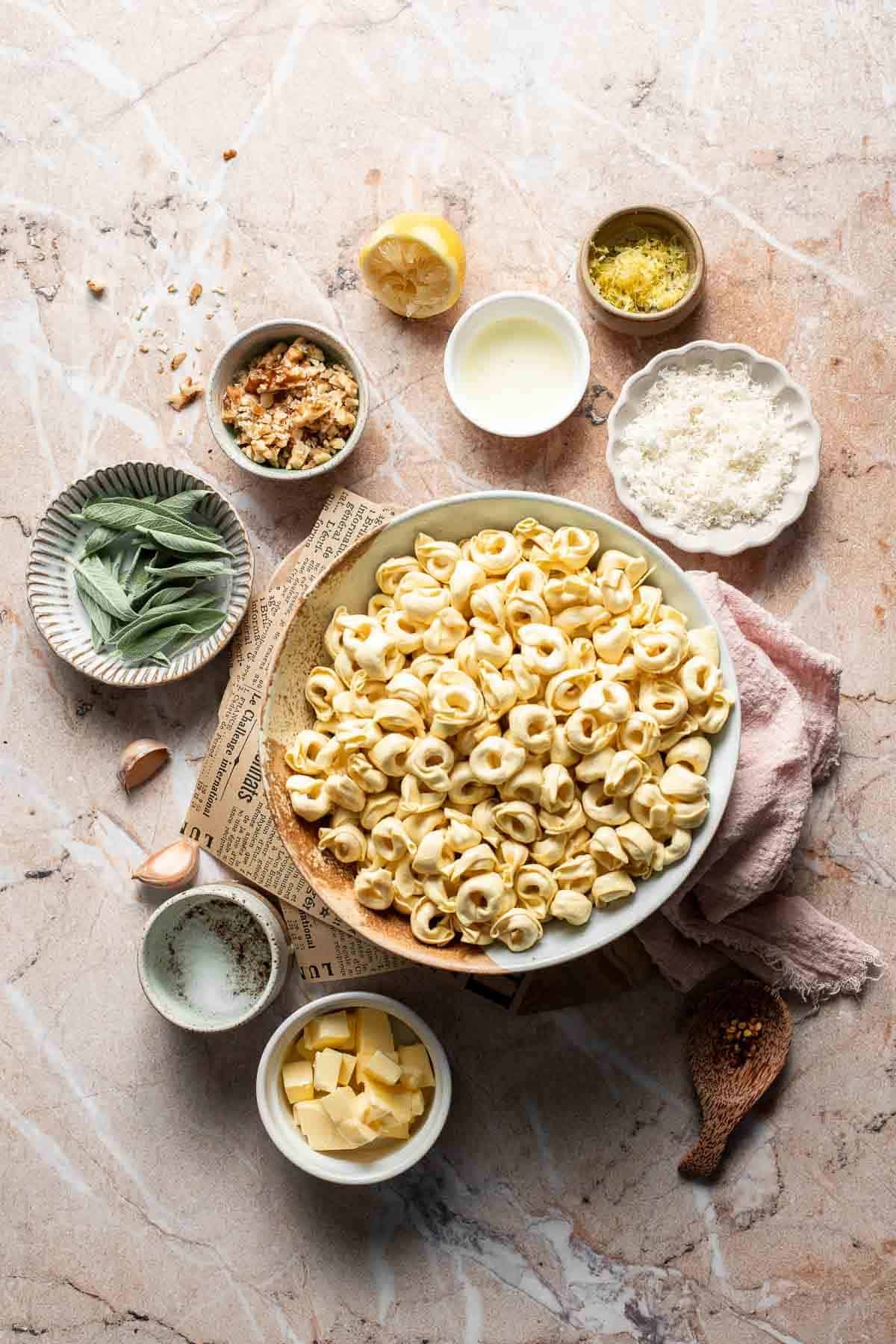
To make this nutty Brown Butter Sage Tortellini, you will need the following ingredients (see recipe card below for quantities):
- Tortellini - Fresh pasta from the refrigerated section works best. We used cheese tortellini but spinach and ricotta or mushroom tortellini also work. Frozen tortellini works too, so follow the package time.
- Hazelnuts or walnuts - Toasting them gives crunch and a deeper flavor. Pecans or pine nuts also work.
- Unsalted butter - It lets you control the salt, and its milk solids are what turn golden and nutty.
- Fresh sage leaves - Pat them very dry so they crisp up and don't splatter. Dried sage isn't a good substitute. Other fresh herbs like thyme can go in at the end, but sage is the star.
- Garlic - Thin slices or minced garlic both work. It cooks gently in the residual heat so it doesn't burn.
- Parmesan cheese - Freshly grated melts into the sauce much more smoothly than pre-shredded.
- Black pepper - Freshly ground adds a little bite.
- Salt - Taste first, since the Parmesan and pasta water are already salty.
- Lemon zest and juice - A little brightens the rich butter, but it's optional.
- Red pepper flakes - Also optional, for a gentle kick.
Equipment
You will need a large pot, a large skillet (a light-colored stainless steel skillet makes it easy to see the butter browning), a slotted spoon, a grater, and a small plate.
Instructions
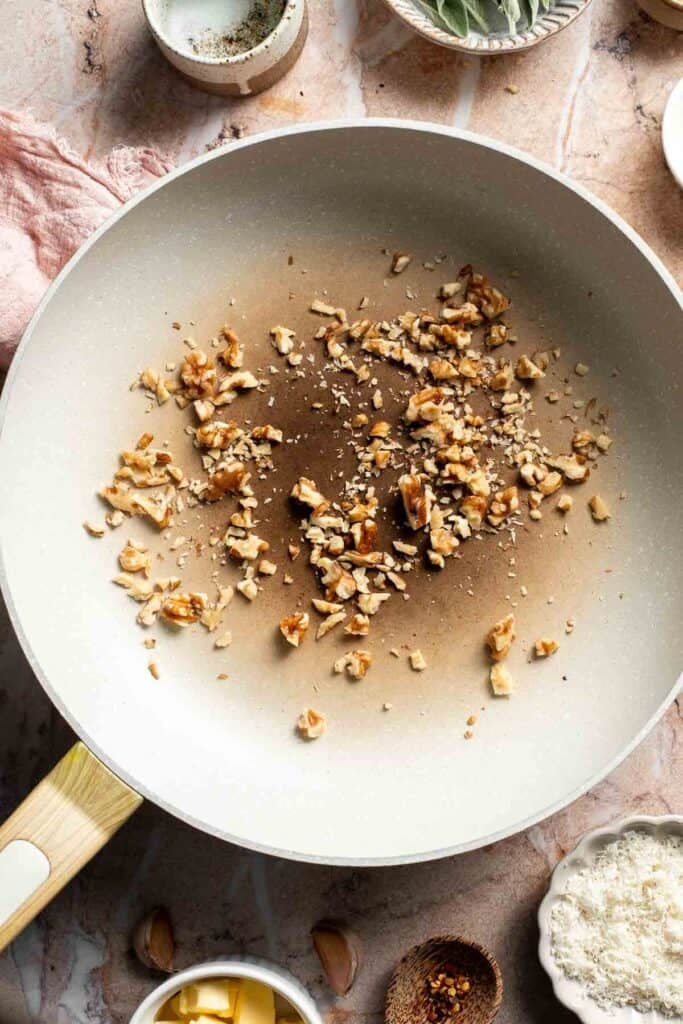
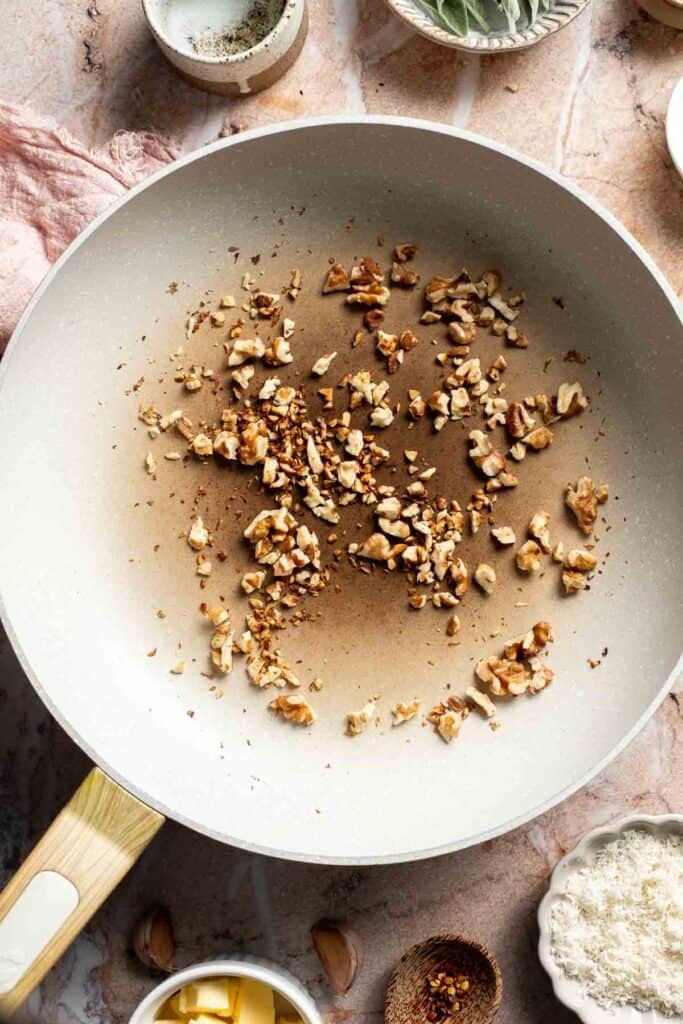
- Toast the nuts. Bring a large pot of salted water to a boil. Meanwhile, add the chopped nuts to a large dry skillet over medium heat. Toast for 3 to 5 minutes, stirring often, until golden and fragrant. Transfer to a plate and set aside.

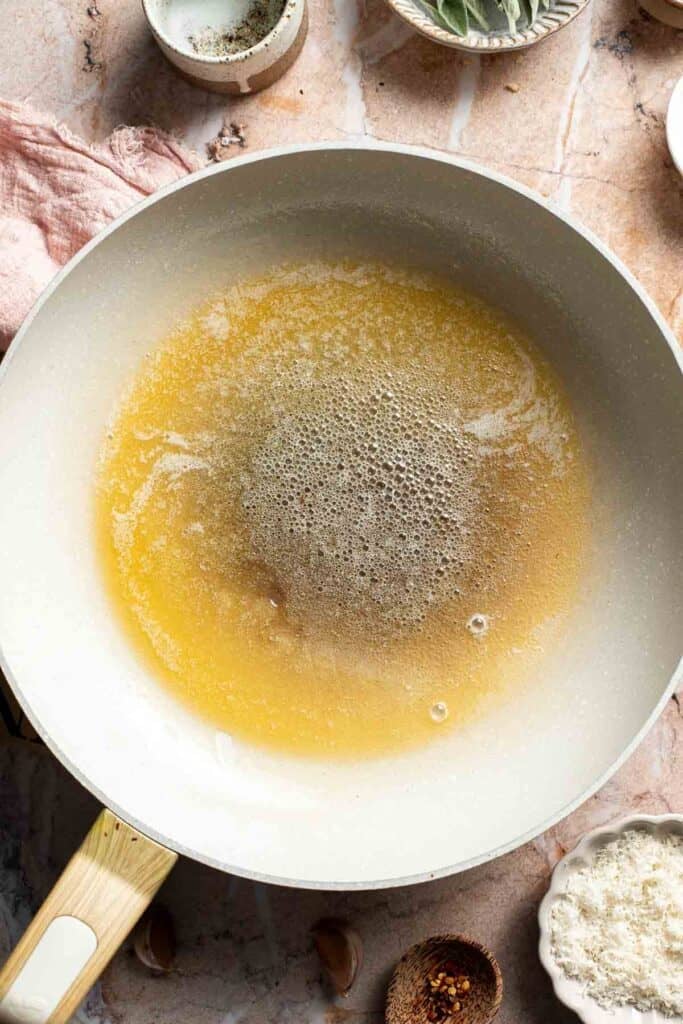
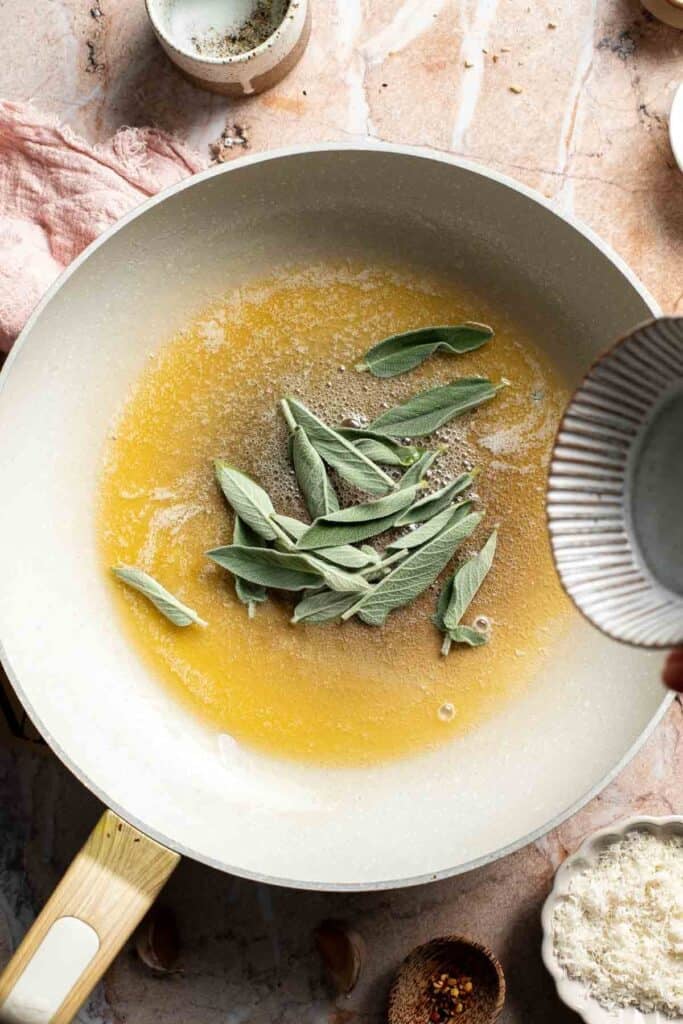
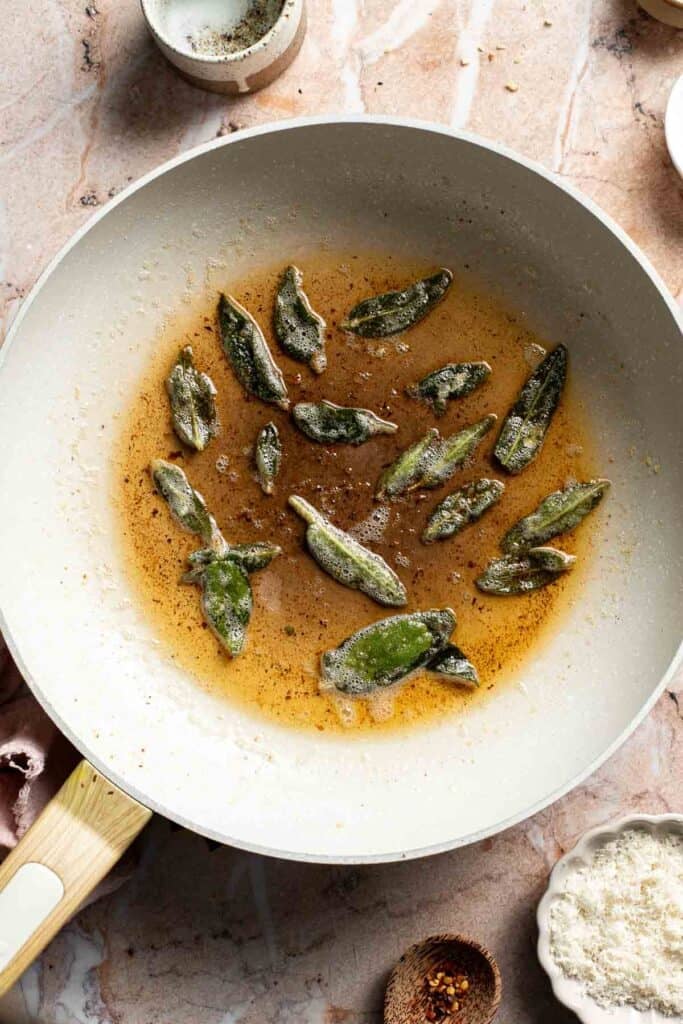
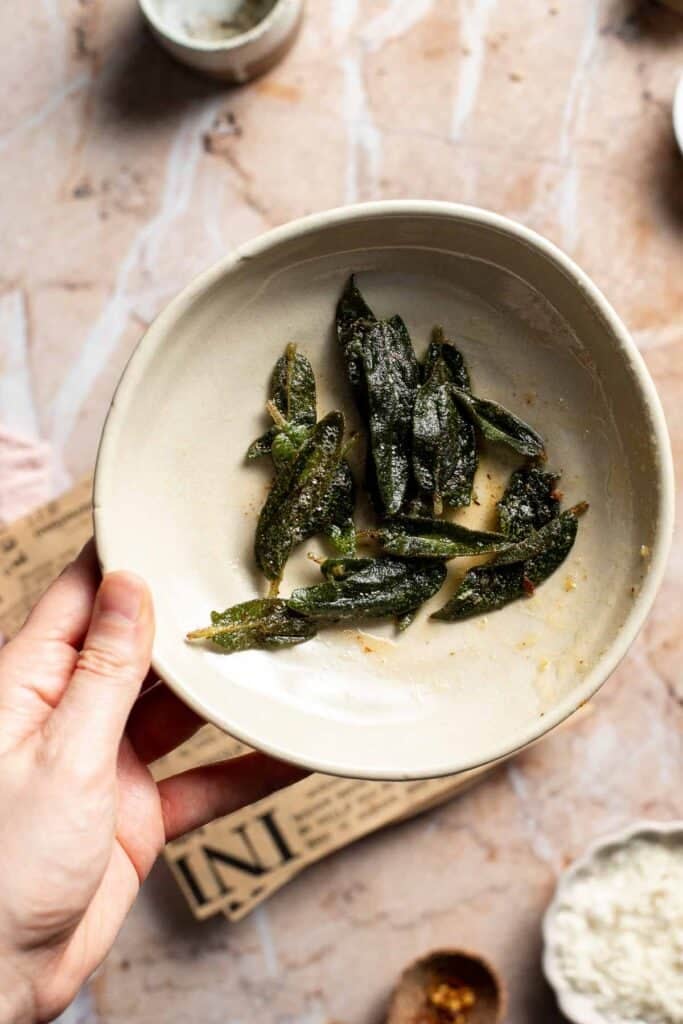
- Brown the butter and crisp the sage. In the same skillet, melt the butter over medium heat. Once it starts to foam, carefully add the sage leaves, since they may spatter, and start the tortellini in the next step. Cook for 3 to 4 minutes, swirling the pan occasionally, until the sage is crisp and the butter turns golden brown with nutty brown flecks at the bottom. Watch closely, because butter can burn quickly. Use a slotted spoon to transfer the sage to a small plate, leaving the butter in the skillet. Remove the skillet from the heat.


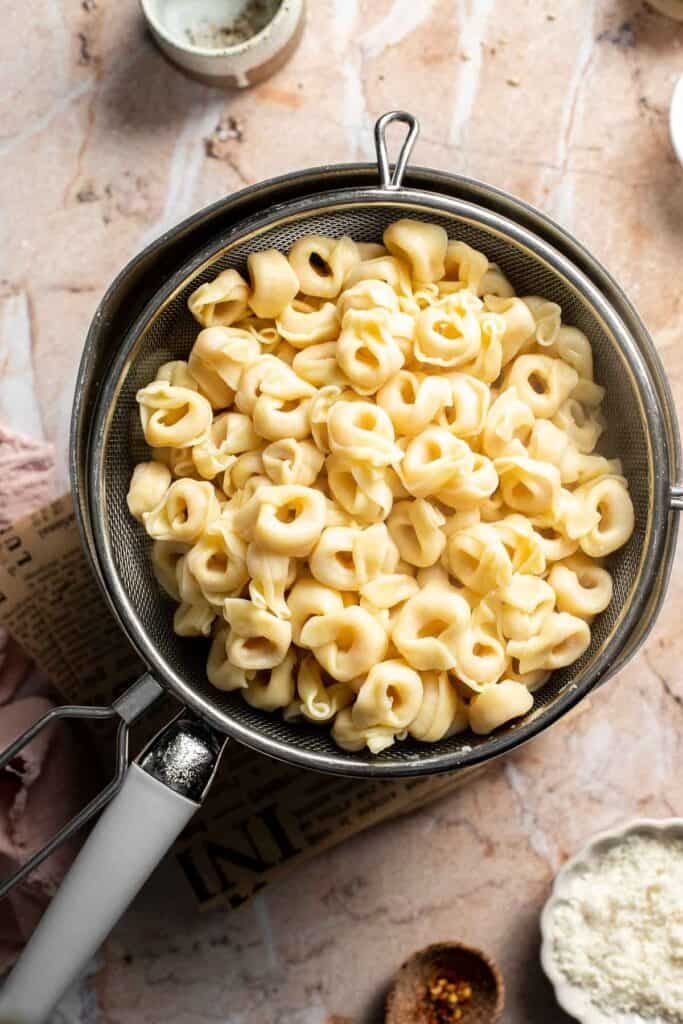
- Cook the tortellini. When you add the sage to the butter, add the tortellini to the boiling water. Cook according to package instructions until tender, usually 2 to 4 minutes. Before draining, reserve 1 cup of the pasta water.


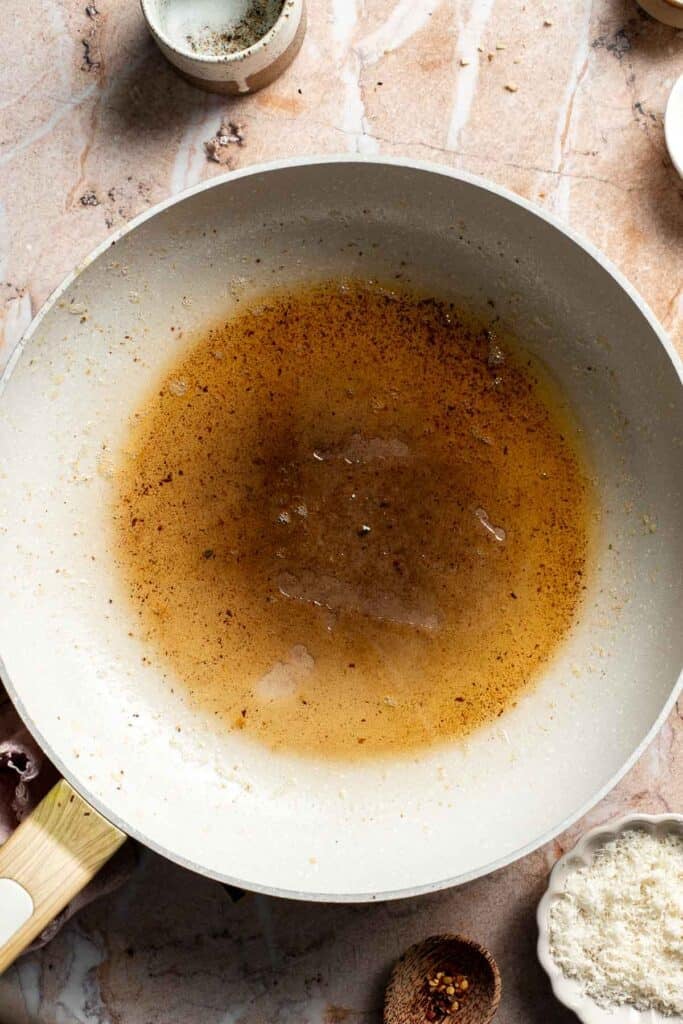
- Add the garlic. Once the sage is out and the skillet is off the heat, add the garlic to the skillet. The leftover heat will cook it in about 30 seconds, until fragrant but not browned.


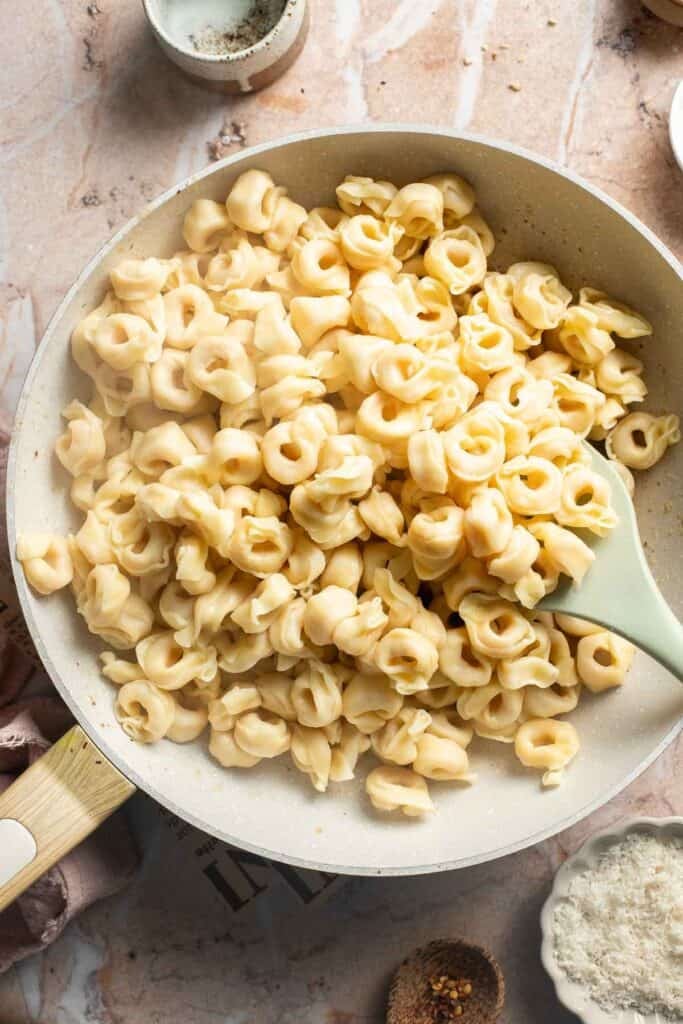
- Toss the tortellini. Return the skillet to low heat. Use a slotted spoon to transfer the tortellini straight from the pot into the skillet, then gently toss to coat in the butter. Add ¼ cup of the reserved pasta water and toss for 1 to 2 minutes. Add more water a little at a time until the sauce looks glossy and clings to the pasta.


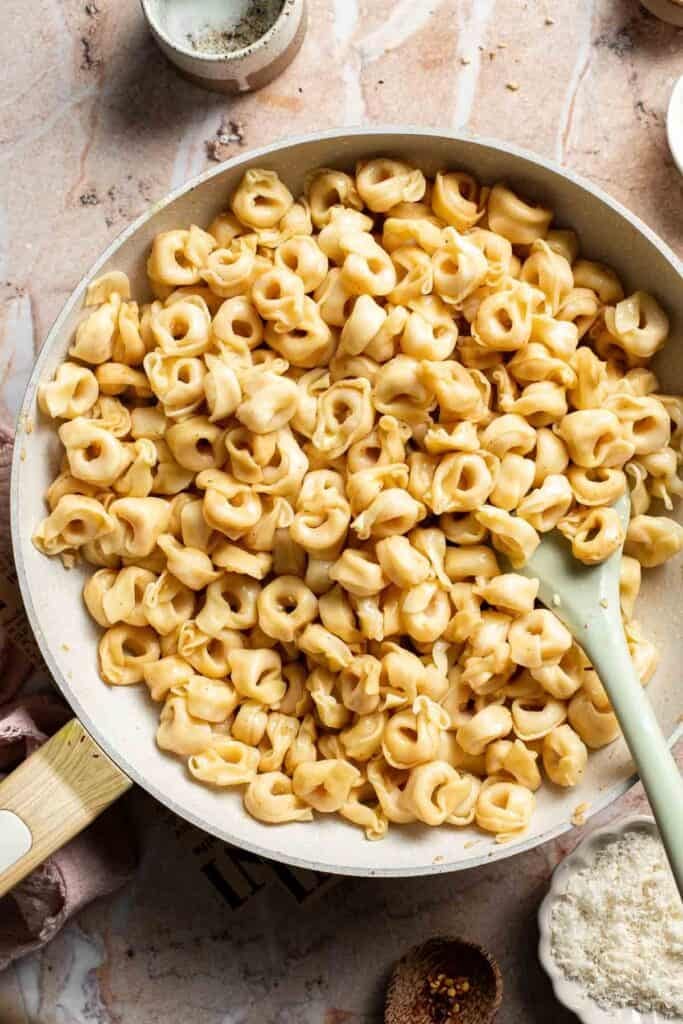
- Finish the sauce. Remove the skillet from the heat. Stir in the Parmesan, pepper, and the lemon zest and juice, if using. Toss gently until the cheese melts into the sauce, adding another splash of pasta water if needed. Taste and season with salt.



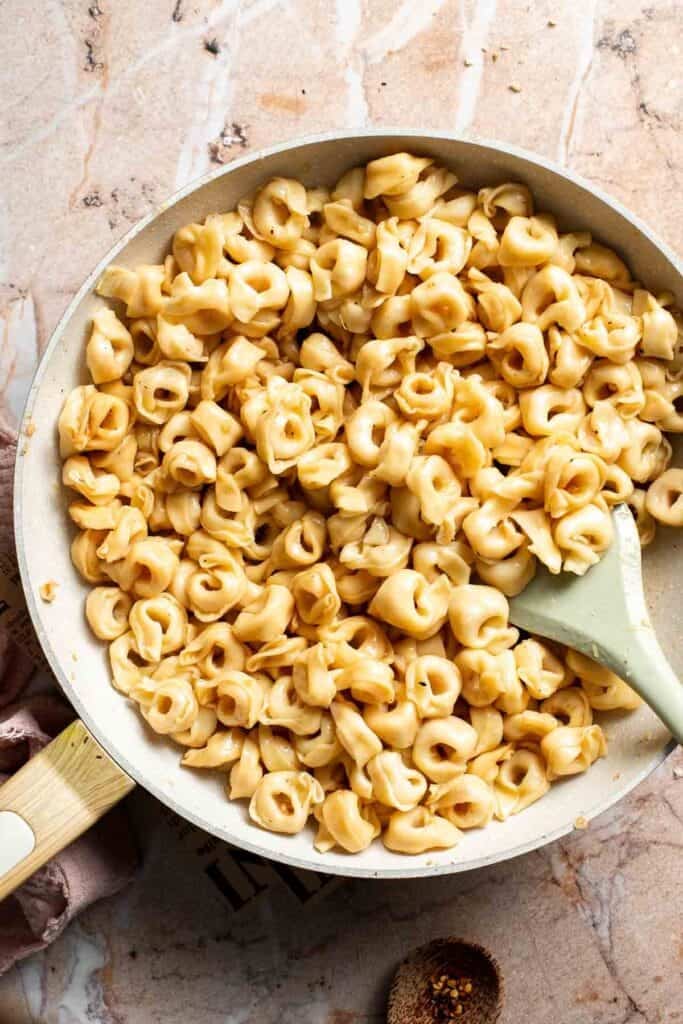
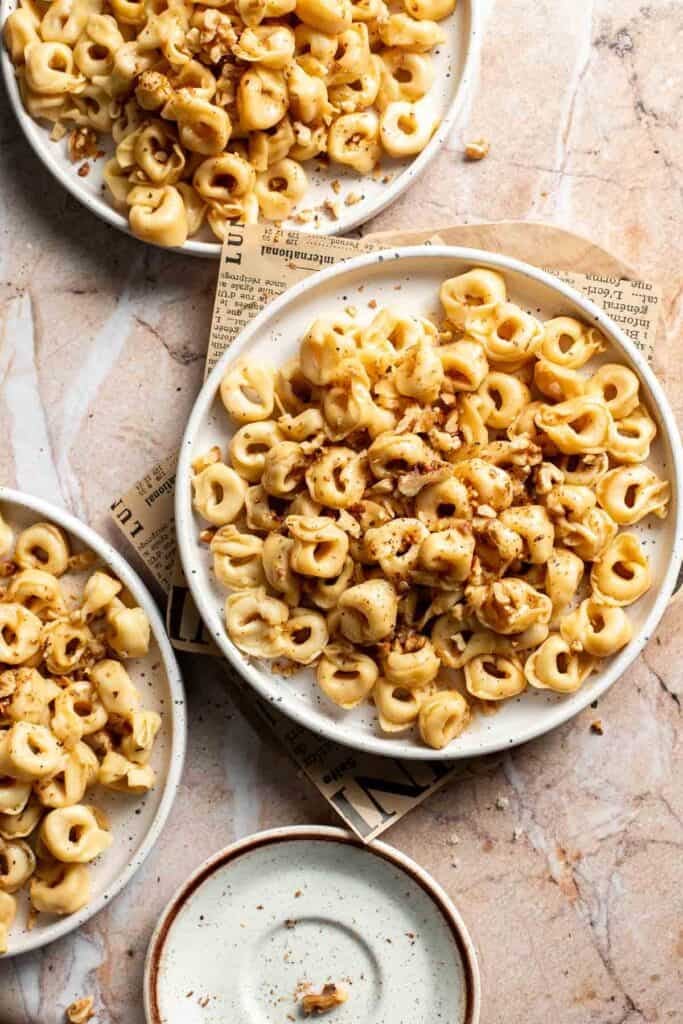
- Serve. Divide among plates. Top with the crispy sage, toasted nuts, extra Parmesan, and red pepper flakes, if you like. Serve immediately.


Expert Tip
Watch the Butter Closely
Butter goes from golden to burnt in seconds. As soon as it smells nutty and the flecks at the bottom turn amber, pull the skillet off the heat, since the butter keeps cooking in the hot pan. A light-colored skillet makes it easy to see the color change.
Recipe Variations
- Add roasted butternut squash. Toss in cubes of roasted squash for a sweet, hearty fall version.
- Stir in spinach. Add a couple of handfuls of baby spinach to the skillet and toss until just wilted.
- Top with crispy prosciutto or bacon. Crumble it over the finished pasta for a salty crunch.
- Add chicken. Toss in sliced or shredded cooked chicken for a heartier dinner. A rotisserie chicken is an easy shortcut.
- Try a different filling. Spinach and ricotta, mushroom, or butternut squash tortellini all work well.
- Use fresh pasta. Homemade fresh pasta, ravioli, or gnocchi cook in minutes and are great in brown butter and sage sauce.
- Swap the nuts. Use pecans, pine nuts, or walnuts in place of the hazelnuts.
- Brighten it up. Finish with lemon zest and juice for a fresh contrast to the rich butter.

Tips for the Best Brown Butter Sage Tortellini
- Pat the sage dry. Wet leaves splatter and won't crisp.
- Use a light-colored skillet. It makes it easy to see the butter turn from yellow to golden brown.
- Use unsalted butter. You control the salt, and the milk solids brown more cleanly.
- Pull the butter off the heat early. It keeps cooking in the hot pan, so stop when it smells nutty.
- Reserve extra pasta water. A full cup gives you plenty to loosen the sage sauce as it sits.
- Transfer the tortellini straight into the skillet. The water clinging to it helps make the sauce.
- Grate your own Parmesan. It melts smoothly, while pre-shredded can turn grainy.
- Serve right away. The sauce tightens as it cools, so toss with a splash of water if needed.

Storage
Make Ahead
Toast the nuts and grate the Parmesan up to 2 days ahead. Store the nuts in an airtight container at room temperature and the cheese in the refrigerator. The sauce and tortellini are best made right before serving.
How to Store
Store leftovers in an airtight container in the refrigerator for up to 3 days. Keep the crispy sage and nuts separate so they stay crunchy.
How to Reheat
Warm the tortellini in a skillet over low heat with a splash of water or milk, stirring gently, until heated through. Top with the sage and nuts after reheating.
How to Serve
Serve this tortellini right away while the sauce is glossy and the sage is crisp. It is a perfect weeknight dinner on its own, or a special pasta course for a holiday meal.
These are my favorite sides to serve with it:
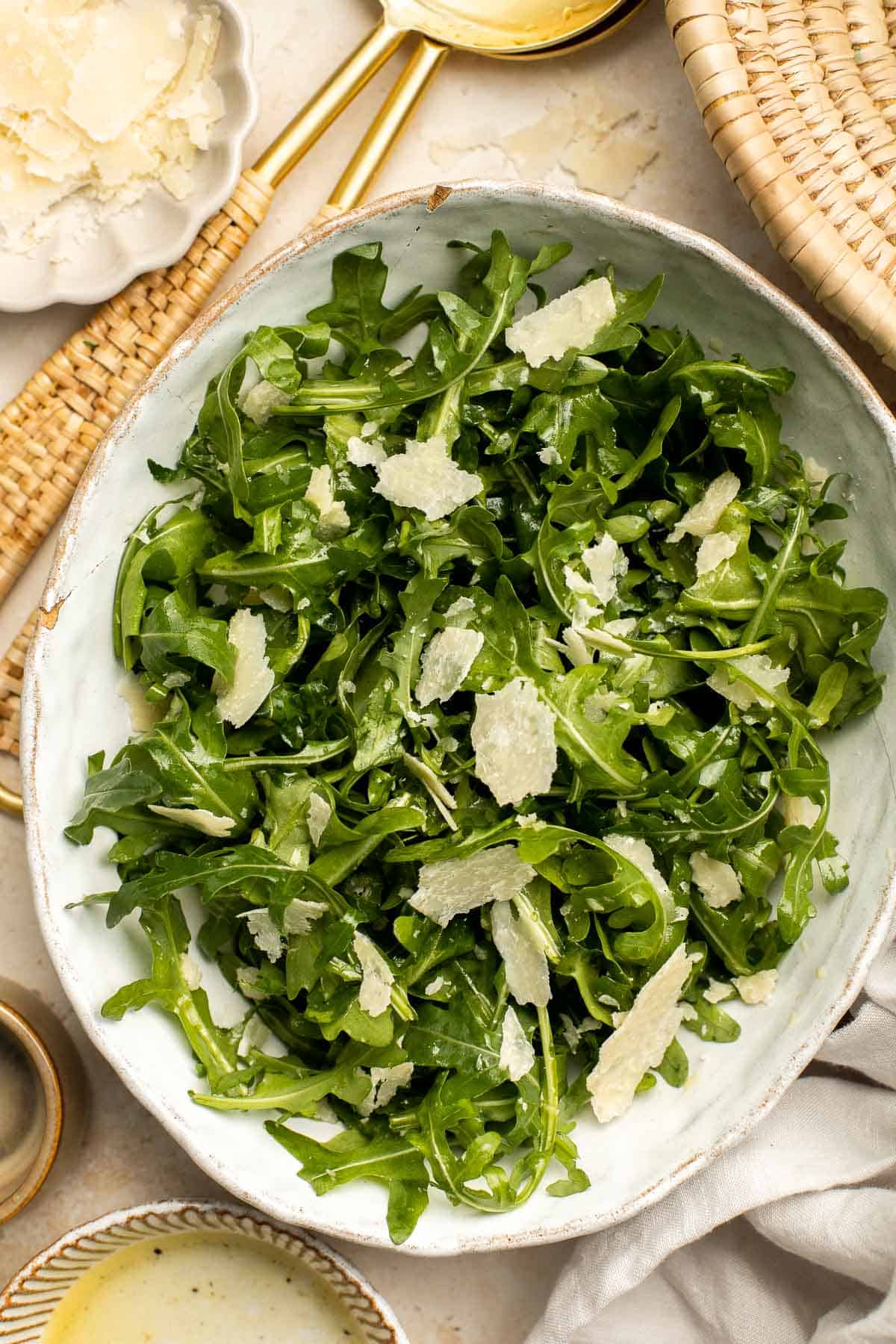
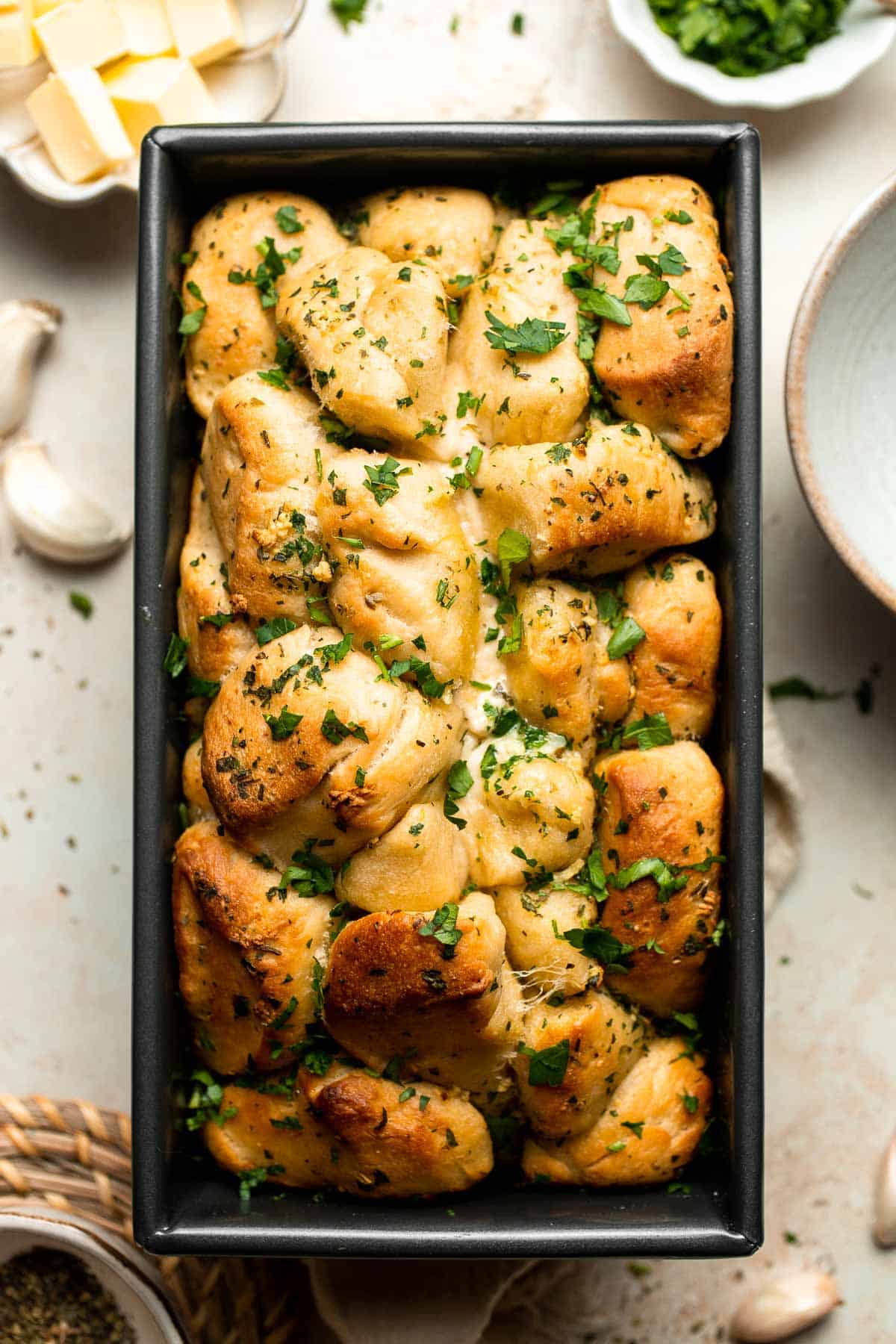
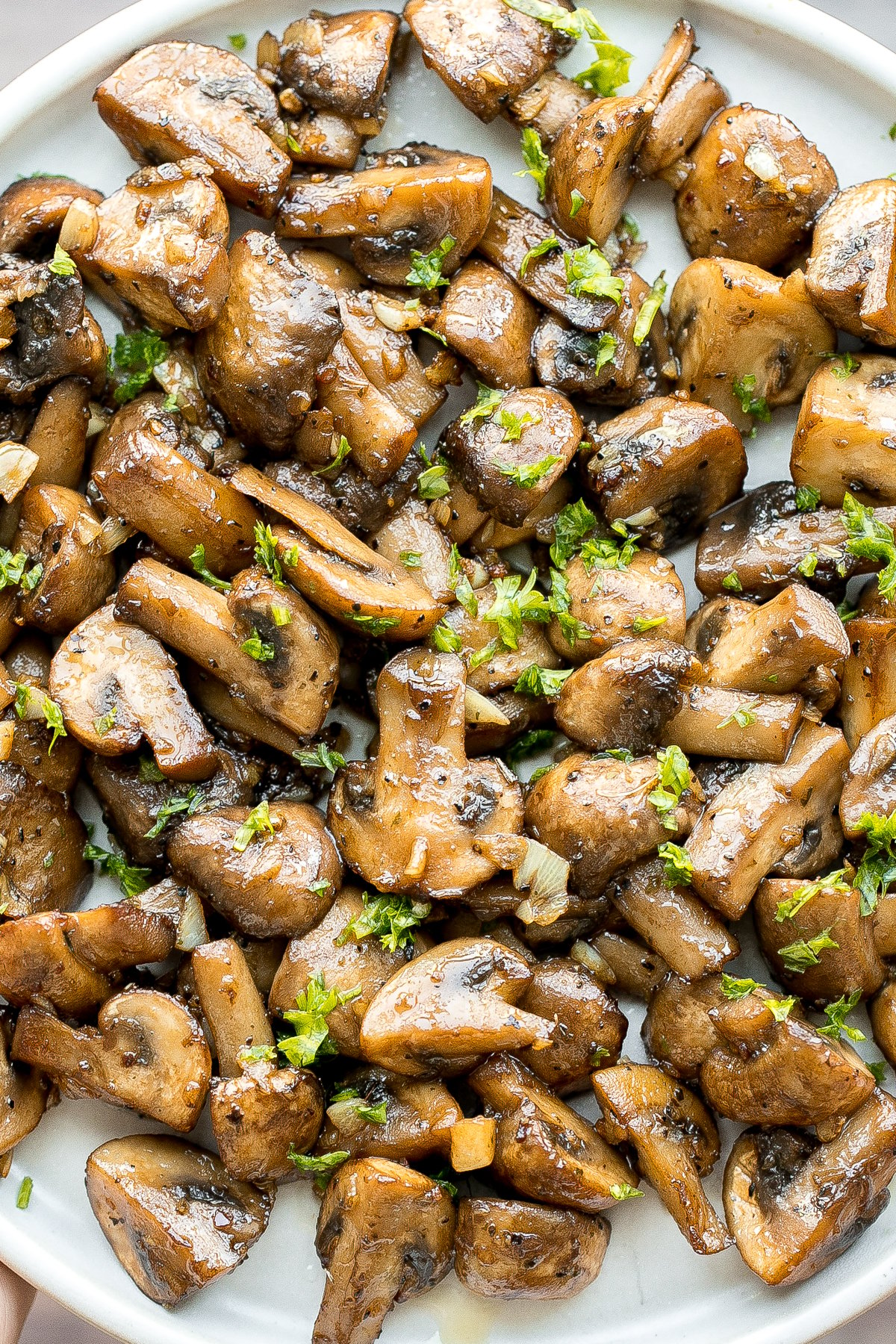


Side Dishes for Pasta
For more recipe ideas, check out our collection of pasta side dishes, featuring everything from fresh salads and roasted vegetables to crusty breads and flavorful appetizers that pair perfectly with any pasta dinner.
FAQ
Brown butter tastes nutty, toasty, and rich, a bit like toasted hazelnuts or caramel, but it isn't sweet. Crisp sage adds an earthy, savory, slightly peppery note. Together they make a rich, aromatic sauce that the salty Parmesan balances.
Yes. Cook it straight from the freezer according to the package directions, which usually takes a minute or two longer than refrigerated.
The butter foams, then the foam settles and the butter turns golden with amber flecks at the bottom. It smells nutty. Take it off the heat right away, since it can burn quickly.
Yes. If it cooks too long, the milk solids go from golden to dark brown and turn bitter. Take the skillet off the heat as soon as it smells nutty and the flecks at the bottom turn amber, since the butter keeps cooking in the hot pan. If it burns, start over.
Yes, but taste before adding any salt at the end. The Parmesan and pasta water add salt too.
Fresh sage is best, because the leaves turn crisp and flavorful in the butter. Dried sage doesn't crisp and can taste dusty.
Walnuts, pecans, or pine nuts all work. Toast them the same way until golden and fragrant.
Toss the tortellini with a splash of the starchy pasta water over low heat. The water helps the butter and cheese come together into a glossy sauce.
Ravioli, gnocchi, or any filled pasta works well with brown butter and sage.
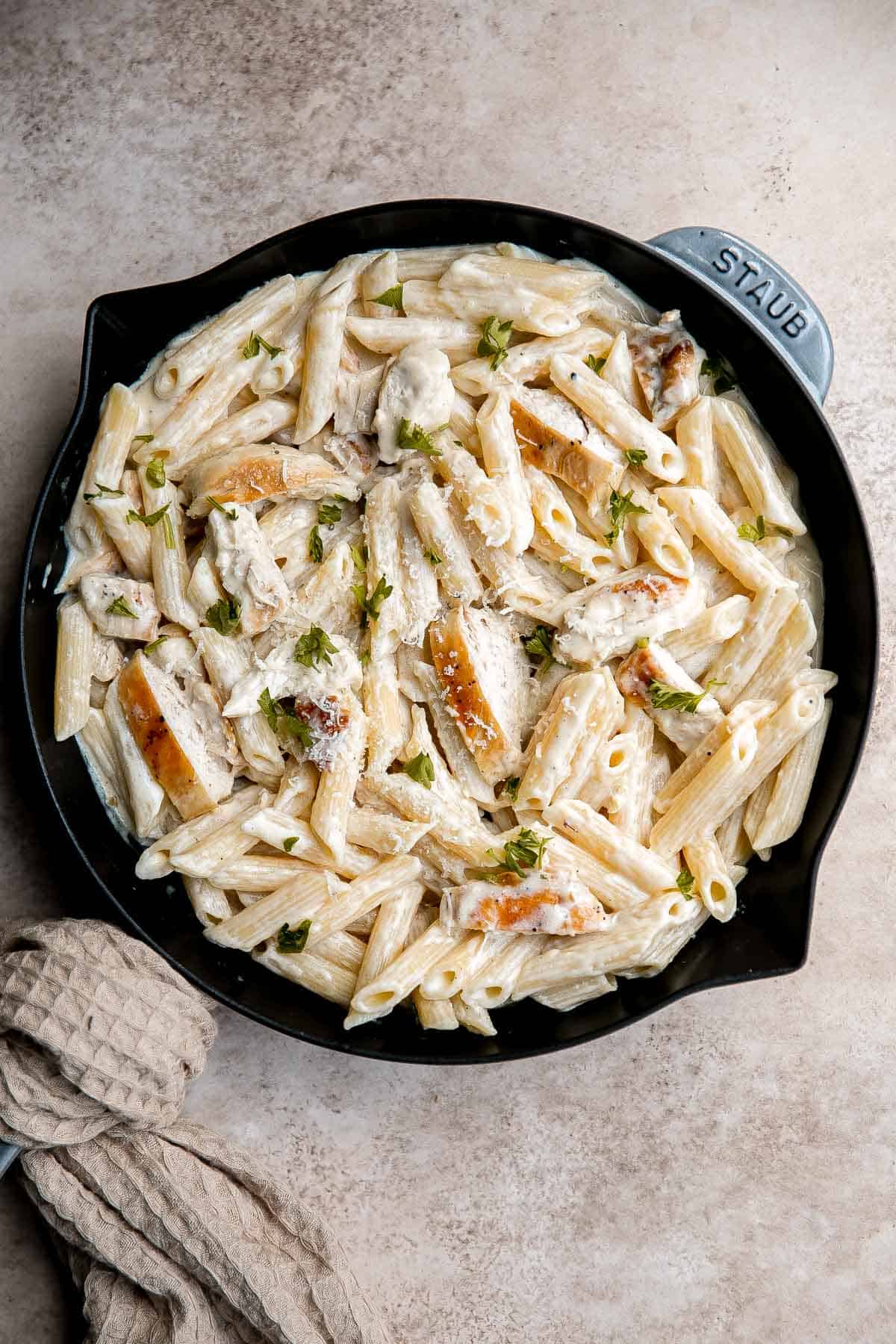
More Pasta Recipes


Tried this recipe?
I'd love to hear what you think! Leave a comment and rating below to share your feedback. Your reviews help others discover this recipe and help me keep creating more free recipes for you. Snap a photo and tag me on social media @aheadofthyme too.

Brown Butter Sage Tortellini
- Total Time: 25 minutes
- Yield: 4 servings 1x
- Diet: Vegetarian
Description
Cheese tortellini tossed in nutty brown butter with crispy sage, garlic, and Parmesan, then topped with toasted hazelnuts. Ready in 25 minutes.
Ingredients
- 20 ounces refrigerated cheese tortellini
- ⅓ cup hazelnuts or walnuts, roughly chopped
- ½ cup unsalted butter
- 15 to 20 fresh sage leaves, patted dry
- 2 cloves garlic, thinly sliced or minced
- ½ cup freshly grated Parmesan cheese (plus more for serving)
- ¼ teaspoon black pepper, freshly ground
- salt (to taste)
- 1 teaspoon lemon zest (optional)
- 1 to 2 teaspoons fresh lemon juice (optional)
- 1 pinch red pepper flakes (optional)
Instructions
- Heat a large dry skillet over medium heat. Add the chopped nuts and toast for 3 to 5 minutes, stirring often, until golden and fragrant. Transfer to a plate and set aside.
- In the same skillet, melt the butter over medium heat. Once it starts to foam, carefully add the sage leaves, since they may spatter. Cook for 3 to 4 minutes, swirling the pan occasionally, until the sage is crisp and the butter turns golden brown with nutty brown flecks at the bottom. Watch closely, because butter can burn quickly. Use a slotted spoon to transfer the sage to a small plate, leaving the butter in the skillet. Remove the skillet from the heat.
- Bring a large pot of salted water to a boil. Add the tortellini to the boiling water. Cook according to package instructions until tender, usually 2 to 4 minutes. Before draining, reserve 1 cup of the pasta water.
- Once the sage is out and the skillet is off the heat, add the garlic to the skillet. The leftover heat will cook it in about 30 seconds, until fragrant but not browned.
- Return the skillet to low heat. Use a slotted spoon to transfer the tortellini straight from the pot into the skillet, then gently toss to coat in the butter. Add ¼ cup of the reserved pasta water and toss for 1 to 2 minutes. Add more water a little at a time until the sauce looks glossy and clings to the pasta.
- Remove the skillet from the heat. Stir in the Parmesan, pepper, and the lemon zest and juice, if using. Toss gently until the cheese melts into the sauce, adding another splash of pasta water if needed. Taste and season with salt.
- Divide among plates. Top with the crispy sage, toasted nuts, extra Parmesan, and red pepper flakes, if you like. Serve immediately.
Notes
- Storage: Store leftovers in an airtight container in the refrigerator for up to 3 days, keeping the crispy sage and nuts separate. Reheat in a skillet over low heat with a splash of water or milk.
- Substitutions: Use pecans or pine nuts in place of the hazelnuts or walnuts. Spinach and ricotta or mushroom tortellini also work.
- Prep Time: 5 minutes
- Cook Time: 20 minutes
- Category: Dinner
- Method: Stovetop
- Cuisine: Italian





Comments
No Comments